Lente kleurplaten voor kinderen: 15 leuke activiteiten voor het seizoen
15 kleuractiviteiten voor kinderen in de lente, georganiseerd per thema: bloemen, insecten, regenachtige dagen, tuinen en feestdagen. Inclusief aanbevelingen voor materialen en tips om van kleuren een leerzame activiteit te maken.
Last weekend my daughter came inside with muddy boots, a fistful of dandelions, and the announcement that "spring is here and we need to do spring stuff." She wasn't wrong. The crocuses were poking through, the birds were back, and everyone in the house had a case of cabin fever after months of gray skies.
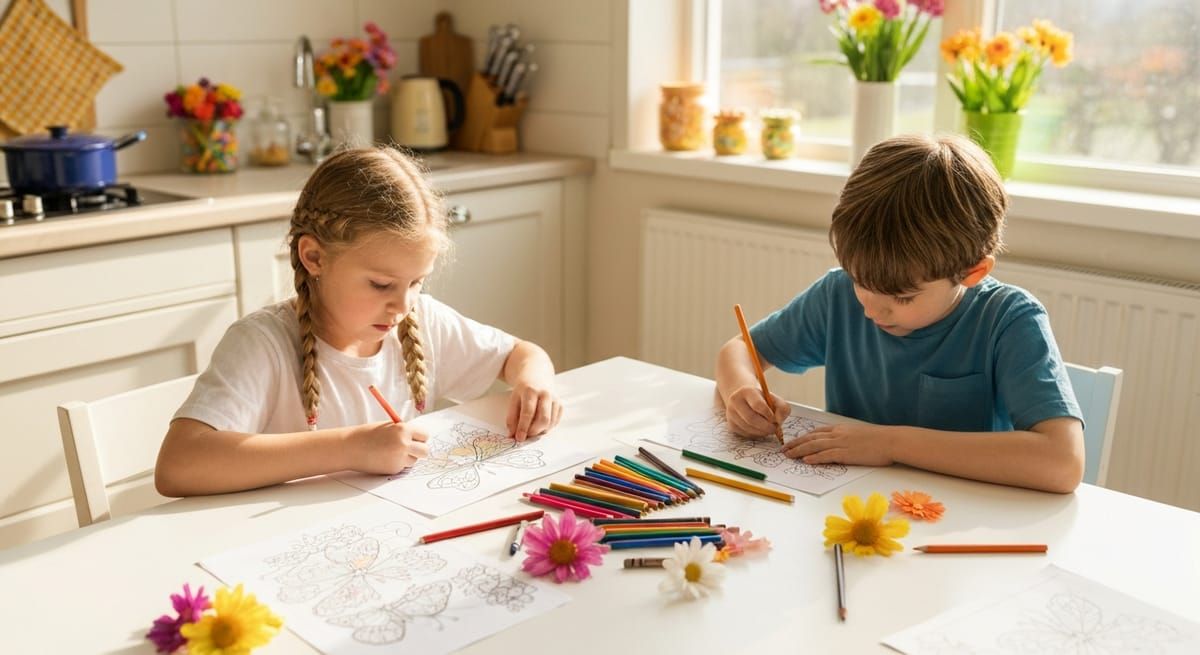
So I printed a stack of spring coloring pages, spread them across the kitchen table, and let her go at it. Two hours later she'd colored a garden scene, a butterfly, and a rainbow, and had asked me roughly forty questions about why flowers bloom and where caterpillars go in winter. Spring coloring pages open up conversations about the season in ways I don't always expect.
Here are 15 spring coloring activities we've tried at our house, broken down by theme, so you can grab the ones that fit your kids and your week.
Flowers in bloom
1. Build a coloring page flower garden
Print five or six different flower coloring pages and let your child color each one. When they're done, cut out the individual flowers and glue them onto a large sheet of paper or poster board to create a garden scene. Add some green construction paper stems and leaves, and you've got wall art that lasts longer than the real flowers outside.
My kids like to add details with markers after gluing, like bees buzzing around or rain falling from cotton ball clouds.
2. Flower identification coloring
This one turns coloring into a mini science lesson. Print flower pages that match what's actually growing in your area: tulips, daffodils, crocuses, cherry blossoms. Go for a walk first and spot the real versions, then come home and color them. Kids remember the names better when they've both seen and colored the flower.
If you want to take it further, write the flower name under each page and have your child practice spelling it. Works well for kids ages 5-8 who are building reading skills.
3. Rainbow flower color mixing
Print a simple flower outline several times. Challenge your child to color each one using only two colors, blending them to make a third. Red and yellow petals blended into orange. Blue and yellow into green. It teaches basic color theory without feeling like a lesson.
Crayola Twistables (24-pack, about $7) work well for this because kids can blend them with their fingers more easily than standard crayons.
Bugs and critters
4. Spring bug scavenger hunt and color
Make a list of spring insects: butterflies, ladybugs, bees, caterpillars, dragonflies. Print a coloring page for each one. Head outside with the list and check off each bug you spot. Back inside, color the pages for every bug you found. The ones you didn't find? Save those for next week's hunt.
We have great pages for this: butterfly, bee, ladybug, and frog pages that range from simple outlines to more detailed designs.
5. Life cycle coloring strips
Print four coloring panels in a row: egg, caterpillar, cocoon, butterfly. Have your child color each stage and then fold it into an accordion book. This is a classroom favorite, and it works just as well at home. Teachers have been using coloring for learning activities like this for years (we wrote about that in our post on why coloring is good for kids).
6. Design your own bug
Print a blank bug outline (an oval body, six legs, two antennae) and let your child invent a new insect. What colors is it? What does it eat? Where does it live? They color their creation and then write or dictate a few sentences about it. My daughter once invented a "rainbow beetle that eats clouds," and honestly, I'd like to see one.
Rainy day activities
7. Rainy day coloring marathon
Spring means rain, and rain means indoor time. Print a big stack (15-20 pages), set up a coloring station at the table, and declare it a coloring afternoon. Put on some music or an audiobook in the background. This is low-effort parenting at its best, and kids actually like it.
For a big batch, mix themes: rainbows, flowers, birds, frogs, mushrooms. Variety keeps things interesting over a longer session.
8. Umbrella and rain boot decorating
Print coloring pages of umbrellas and rain boots with blank spaces for patterns. Kids fill in the patterns themselves, designing their own gear. Polka dots, stripes, zigzags, flowers, whatever they want. It's a design activity wrapped in a coloring page.
9. Puddle painting combo
Color a spring rain scene first, then go outside after an actual rainstorm and stomp in puddles. When you come back in, put the coloring page next to the window and compare the real sky to the one they colored. Small thing, but kids notice the connection.
Garden and nature themes
10. Plant a seed, color a seed
If you're starting a garden this spring, pair it with coloring. The day you plant seeds, print coloring pages of what you planted. Sunflower seeds go in the ground, sunflower coloring page goes on the fridge. Check the garden each week and color a new page showing the growth stage: sprout, stem, leaves, flower.
We've got tree and mushroom pages too, if your kids are into woodland themes rather than garden ones.
11. Bird watching and coloring
Spring migration brings new birds. Print bird coloring pages and bring them outside with binoculars (or just your eyes). When you spot a robin, find the robin coloring page and color it with the right colors. It's a low-key way to introduce bird identification without any pressure.
A Peterson First Guide to Birds (about $7 at most bookstores) pairs nicely with this if your kids get interested. But even without a guide, you can look up birds on your phone while they color.
12. Spring garden coloring placemat
Print a large garden scene coloring page, let your child color it, then laminate it or slide it into a gallon-sized zip-top bag. Instant placemat for spring meals. Kids are weirdly proud of eating dinner on top of their own artwork.
Spring celebrations
13. May Day flower baskets
Print flower coloring pages, color them, cut them out, and glue them onto small paper bags or cones. Fill with a few pieces of candy. Hang them on neighbors' doors and ring the bell. May Day baskets are an old tradition that most kids have never heard of, and the surprise factor makes it fun.
14. Spring birthday party coloring station
If your child has a spring birthday, set up a coloring table at the party. Print 30-40 spring-themed pages, put out cups of crayons and markers, and let kids color between activities. Parents are always relieved to have one station that doesn't require supervision. Send each kid home with their colored pages as a party favor.
For party coloring, Crayola SuperTips markers (50-pack, about $12) are the best option. They're washable, the tips hold up when kids press hard, and there are enough colors that kids don't fight over them.
15. Spring equinox coloring journal
On the first day of spring, start a weekly coloring journal. Each week, your child colors a page that matches something they noticed about the season that week. First week: crocuses. Second week: a robin. Third week: rain. By the end of spring, they have a visual diary of the season changing.
Bind the pages together with a stapler or hole-punch and yarn. My kids flip through last year's journal and compare it to what's happening outside right now. It turns coloring into observation, which is a skill that carries over into school.
Picking the right supplies for spring coloring
You don't need anything special. Whatever crayons or markers you have at home will work. But if you're looking to restock, here's what I'd grab:
For younger kids, ages 2-5, Crayola Large Crayons (16-pack, about $4) work well. The thick barrel is easier for small hands to grip, and the colors are bright enough to keep them interested. Once kids hit 5-10, colored pencils (24-pack, about $5) give more control for staying inside the lines. Pair them with a good sharpener. Dull colored pencils are the fastest way to frustrate a kid. And if you're stocking up for a group or a party, Crayola SuperTips markers (50-pack, about $12) are hard to beat. Enough variety for sharing, and they wash out of most clothes.
If you want to know more about which coloring tool fits best, we compared crayons, colored pencils, and markers in detail.
Paper tip: Standard 20lb printer paper is fine for crayons. If your kids prefer markers, bump up to 28-32lb paper so the ink doesn't bleed through. A ream of heavier paper costs $3-4 more and saves you from marker ghosts on the kitchen table.
Making spring coloring educational
Coloring already has benefits for kids on its own, from fine motor skills to focus and patience. (We've got a whole piece on why coloring is good for kids if you're curious about the research.) But spring themes make it easy to sneak in extra learning.
You can work vocabulary in by labeling the pages. "Chrysanthemum" is a fun word for a six-year-old to learn, especially when they're coloring one. Counting shows up naturally too: "How many petals does this flower have? How many spots on the ladybug?" Science is easy to fold in. Pair coloring with simple questions like "Why do you think flowers bloom in spring?" or "Where do butterflies come from?" You don't need to have all the answers. Looking things up together is part of the fun. Even geography works: "Robins fly south in winter and come back in spring. Where do you think south is?" Pull up a map. Color the robin. Point at the map. Done.
Coloring can also be a calming activity when the excitement of spring gets a little overwhelming. If your kids come inside overstimulated from running around, a coloring page can bring the energy down. It works for the same reasons it helps with stress in adults.
Get started this week
Pick two or three activities from this list and try them this weekend. The flower garden collage (#1) and the bug scavenger hunt (#4) are the easiest to set up, since all you need is a printer, some pages, and crayons. Print a few flower, butterfly, and rainbow coloring pages, grab whatever coloring supplies you have, and sit down with your kids for twenty minutes. Last time we tried the flower garden collage, twenty minutes turned into an hour and a half.

Art Educator & Content Director
Art educator with 12+ years of classroom experience. Certified in Art Education and Child Development. Helping families and teachers unlock the power of creative play.
You Might Also Like
Zomerse kleuractiviteiten voor kinderen: 12 manieren om verveling tegen te gaan
12 zomerse kleuractiviteiten, georganiseerd per thema: strand en oceaan, natuur, feestjes en reizen. Inclusief tips voor benodigdheden bij warm weer, educatieve links en leeftijdsadviezen.
Paaskleurplaten waar kinderen (en ouders) echt naar uitkijken
Makkelijke kleurplaten voor Pasen voor gezinnen met kinderen van alle leeftijden. Van eieren zoeken met kleurplaten erin tot doe-het-zelf manden en aftellen met kleuren.
Kerstkleurplaten waar je gezin echt van zal genieten
Makkelijke kleurplaten voor Kerstmis voor gezinnen met kinderen van alle leeftijden. Van adventskalenders tot doe-het-zelf ornamenten, hier zijn ideeën die echt werken.