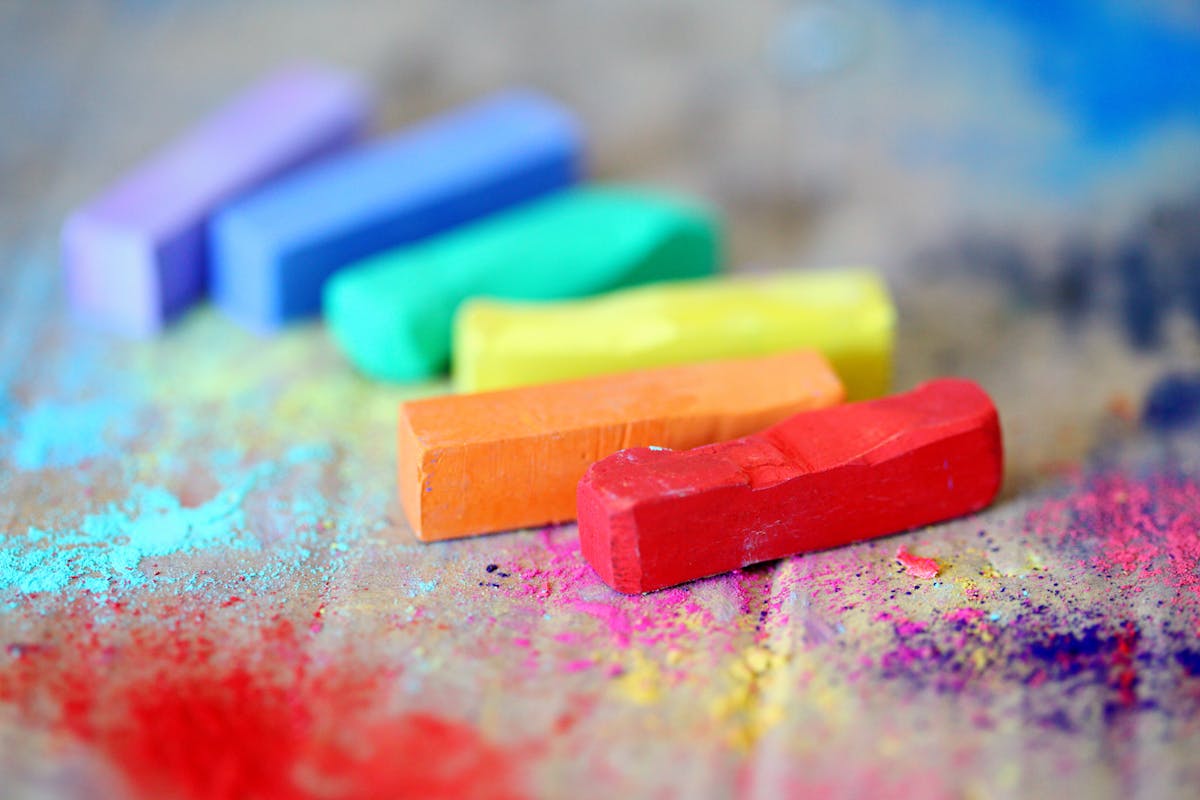
¿Crayones, lápices de colores o rotuladores? Elegir el material adecuado para colorear
Una guía práctica para elegir entre ceras de colores, lápices de colores, rotuladores y bolígrafos de gel para colorear. Recomendaciones por grupos de edad y presupuesto.
You've got a stack of coloring pages ready to go. Now what do you color them with?
The answer depends on who's coloring, what the page looks like, and what result you're after. I've tested pretty much everything over the past few years, from the cheapest dollar-store crayons to $80 sets of professional colored pencils. Here's what I've learned.
Crayons: the workhorse
Crayons are forgiving, cheap, and nearly indestructible. A 24-pack of Crayola costs about $3, and they work on any paper.
Best for:
- Kids under 6 (the chunky grip is easier for small hands)
- Quick, casual coloring sessions
- Pages with large, open areas
Not great for:
- Detailed pages with small spaces
- Blending or layering colors
- Anyone who wants precision
Crayons lay down color in thick, waxy strokes. That's a feature for young kids, who need something that makes a mark without much pressure. But it becomes a limitation for older kids and adults who want to shade, blend, or fill tiny areas neatly.
My pick: Crayola Classic crayons for everyday use. If you want something nicer, Crayola's "Colors of the World" set has a better color range and slightly smoother application.
Colored pencils: the sweet spot
Colored pencils are where most people land once they get past the crayon stage. They offer more control, better color variety, and the ability to shade and blend.
Best for:
- Kids 7 and up
- Adults who want a relaxing coloring experience
- Detailed pages with small spaces
- Anyone who likes layering and blending
Not great for:
- Very young children (the points break easily with heavy pressure)
- People who want bold, saturated colors quickly
There are two main types of colored pencils: wax-based and oil-based.
Wax-based (Prismacolor, Crayola) are softer and lay down color more easily. They blend well but can develop a white, hazy film ("wax bloom") over time. Just wipe it gently with a tissue and it goes away.
Oil-based (Faber-Castell Polychromos, Lyra) are firmer and give you more control. They don't bloom, and the colors stay true longer. They're also more expensive.
For most people, a wax-based set is the right starting point.
Budget pick: Crayola Colored Pencils 50-pack (about $8). They're surprisingly decent for the price.
Mid-range: Prismacolor Scholar 48-pack (about $20). Noticeably smoother than Crayola, with better color payoff.
Worth the splurge: Prismacolor Premier 72-pack (about $45). These are the standard for adult coloring enthusiasts. Rich, buttery color that blends like a dream.
Markers: bold and fast
Markers give you the most vivid, saturated colors. They fill large areas quickly and produce clean, even coverage.
Best for:
- Kids who like bright, bold results
- Pages with large areas to fill
- People who like instant, vibrant color
Not great for:
- Thin paper (they bleed through almost everything)
- Blending and gradients (unless you use alcohol-based markers)
- Detailed shading work
The biggest issue with markers is paper bleed-through. If you're printing coloring pages at home on standard 20lb copy paper, markers will soak right through to the other side. Print on 32lb paper or cardstock to avoid this.
For kids: Crayola SuperTips are hard to beat. They have a fine enough tip for detail work, don't dry out quickly, and come in tons of colors.
For adults: Tombow Dual Brush Pens are popular in the coloring community. They have a flexible brush tip on one end and a fine tip on the other. They're water-based, so they blend with a wet brush.
If money isn't an obstacle: Copic markers are the gold standard for professional-quality coloring. They're alcohol-based, refillable, and blend beautifully. A single marker costs $6-8 though, so a full set is an investment.
Gel pens: the niche pick
Gel pens are great for adding detail, highlights, and accents. Metallic and glitter gel pens can make a finished coloring page look genuinely impressive.
I wouldn't use gel pens as my only coloring tool (they're slow for filling large areas), but they're fantastic as a finishing touch on top of colored pencil work.
Best pick: Sakura Gelly Roll pens. The white ones are especially useful for adding highlights to dark areas.
So what should you buy?
Here's my honest recommendation based on who's coloring:
Toddlers (2-4): Jumbo crayons. Nothing else. They'll break regular crayons and eat the caps off markers.
Kids (5-8): Crayola crayons and a set of Crayola SuperTips markers. This covers all bases.
Older kids (9-12): Crayola Colored Pencils or Prismacolor Scholar. They'll appreciate the control.
Adults just starting: Prismacolor Scholar colored pencils and a pack of printed coloring pages on cardstock. Spend about $25 total and see if you enjoy it.
Adults who are hooked: Prismacolor Premier or Faber-Castell Polychromos colored pencils, plus Tombow markers for variety.
One thing that matters more than supplies
Paper quality. Seriously.
The best colored pencils in the world feel mediocre on flimsy 20lb copy paper. The color doesn't lay down smoothly, details get lost, and markers bleed straight through.
When you print coloring pages, use at least 28-32lb paper. It costs a little more (about $10 for 500 sheets) but the difference is night and day. Your colors will be more vibrant, your blending will be smoother, and you can use markers without worrying about bleed-through.
You can download and print any of our coloring pages for free. Pick a page, print it on decent paper, and try whichever supplies you have around the house. You can always upgrade later.

Art Educator & Content Director
Art educator with 12+ years of classroom experience. Certified in Art Education and Child Development. Helping families and teachers unlock the power of creative play.
You Might Also Like
Cómo convertir una foto en una página para colorear (herramienta de IA gratuita)
Cómo convertir cualquier foto en una página para colorear imprimible con una herramienta de IA gratuita. Incluye los mejores tipos de fotos, instrucciones paso a paso, usos creativos y consejos para colorear páginas personalizadas.
Cómo colorear flores: consejos para conseguir pétalos, hojas y ramos realistas
Todo lo que necesitas saber para colorear flores de forma realista: sombreado de pétalos, técnicas para las hojas, dirección de la luz, paletas de colores, errores comunes y los mejores materiales.
La guía definitiva para colorear mandalas
Todo lo que necesitas saber sobre cómo colorear mandalas: cómo elegir niveles de complejidad, métodos de planificación del color, técnicas, suministros, errores comunes y cómo crear una práctica diaria.