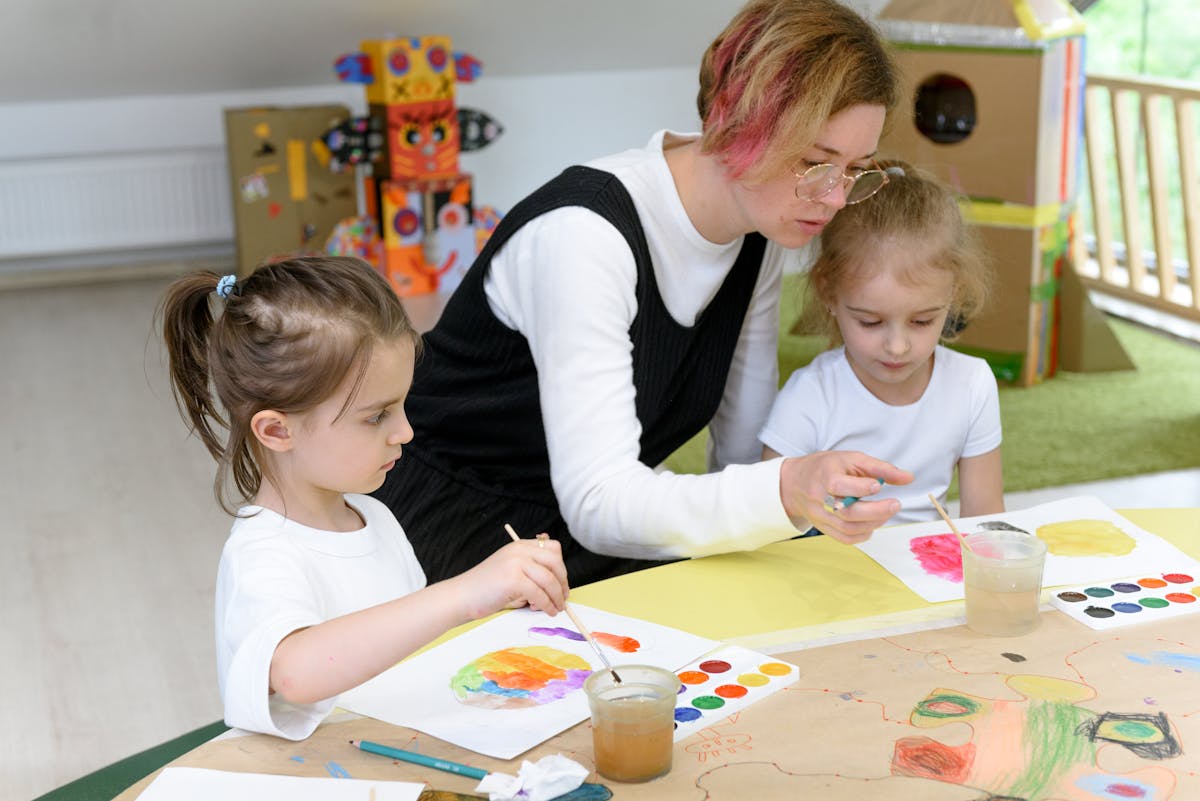
Why coloring is good for your kid (and not just because it keeps them quiet)
That quiet coloring time is doing more for your kid than you think. Here's what the research says about motor skills, focus, and emotional development.
You hand your four-year-old a coloring page and a fistful of crayons. For the next twenty minutes, the house goes quiet. You get to drink your coffee while it's still warm. Everyone wins.
But here's the thing most parents don't realize: that quiet time is doing more for your kid than just saving your sanity. There's actual science behind why coloring matters for children, and it goes well beyond "keeping them busy."
Fine motor skills get a real workout
Every time your kid grips a crayon and tries to stay inside the lines, they're building the same hand muscles they'll need for writing. A 2016 study published in the Journal of Early Childhood Research found that children who regularly engaged in coloring and drawing activities showed measurably better pencil grip and letter formation when they started school.
Think about what coloring actually requires: holding a small tool, applying the right amount of pressure, controlling direction. For a three-year-old, staying inside a big circle is a genuine physical challenge. For a six-year-old, filling in the tiny spaces of a detailed dragon coloring page requires real coordination.
This is why occupational therapists often use coloring as part of their work with kids who struggle with handwriting. It's not busywork. It's targeted practice disguised as fun.
Focus doesn't come naturally. Coloring helps build it.
Sitting still and concentrating on one thing for 10 or 15 minutes is hard for young kids. Coloring gives them a reason to try. There's no timer, no score, no right answer. Just a page that slowly fills with color.
I've watched my own kids go from scribbling across a page in 30 seconds flat to spending 20 minutes carefully choosing colors for each section of a butterfly's wings. That patience didn't happen overnight, and coloring played a part in building it.
Teachers notice this too. Kids who color regularly at home tend to sit through classroom activities more easily. It's not magic; it's practice. Sustained attention is a skill, and like any skill, it improves with use.
Color recognition and decision-making
When your kid picks up a green crayon for the leaves and a brown one for the tree trunk, they're making decisions. Simple ones, sure. But decision-making starts somewhere.
And it's not always obvious. I've seen kids debate with themselves about whether a cat should be orange or purple. That internal conversation (Should I use the real color or the one I like better?) is early creative reasoning. They're weighing options and committing to a choice. That matters more than it looks like it does.
Self-expression without needing words
Not every kid is a talker. Some children process their feelings better through art than through conversation. A child who colors a sunny scene in all dark blues might be telling you something they can't put into words yet.
Child psychologists have used art-based activities (including coloring) for decades as a way to understand how kids are feeling. You don't need a psychology degree to pay attention, though. Just notice what your kid chooses to color, which colors they reach for, and whether they seem relaxed or frustrated while doing it.
It's genuinely calming
This one applies to adults too, but it's especially worth noting for kids. Coloring activates the parts of the brain involved in focus and motor control while quieting the amygdala, the part that handles stress and anxiety.
If your child is having a rough afternoon, handing them a coloring page can genuinely help them settle down. Not because it distracts them from their feelings, but because the repetitive, focused motion has a real calming effect on the nervous system.
A 2020 study in the Art Therapy journal found that structured coloring (as opposed to free drawing) was particularly effective at reducing anxiety in children aged 6-12. The structure of a coloring page gives kids enough guidance that they don't feel overwhelmed, but enough freedom that they feel in control.
The best part: it's free and easy
You don't need special equipment. You don't need to supervise every second. You don't need to sign up for a class or download an app.
Print a coloring page, grab some crayons, and let your kid go. That's it.
We have thousands of free printable coloring pages on this site, organized by topic and difficulty level. Easy pages with thick lines work well for toddlers and preschoolers. Medium and hard pages are better for older kids who want more detail.
A few tips to get the most out of coloring time
- Let them choose. Kids are more engaged when they pick their own coloring page. Dinosaurs, unicorns, space rockets, whatever they're into right now.
- Don't correct. Purple grass and green skies are fine. The point isn't realism. It's expression.
- Color with them. Sitting together and coloring is one of the simplest ways to spend quality time. No screens, no agenda, just crayons and conversation.
- Keep supplies accessible. If crayons and coloring pages are easy to reach, kids will use them on their own. Put together a small coloring station they can access without asking.
The bottom line
Coloring is one of those rare activities that kids love and that's actually good for them. It builds motor skills, grows attention spans, supports emotional expression, and reduces stress. And it costs next to nothing.
So the next time your kid asks for a coloring page, say yes. You're not just keeping them occupied. You're giving them something that genuinely helps them grow.
Art Educator & Content Director
Art educator with 12+ years of classroom experience. Certified in Art Education and Child Development. Helping families and teachers unlock the power of creative play.
You Might Also Like
Princess, mermaid, or unicorn? A guide to fantasy coloring pages for kids
A parent's guide to fantasy coloring pages: princess gowns, mermaid scales, unicorn rainbow manes, dragons, and fairies. Includes creative activities, supply recommendations, and storytelling tips.
Animal coloring pages for kids: a parent's guide to learning through coloring
A parent's guide to using animal coloring pages for learning. Age-appropriate picks from toddlers to tweens, educational activities, supply recommendations, and the most-requested animals.